How to get a halal stock API in 2026 (step-by-step)
Step-by-step guide on how to get a halal stock API in 2026: vendor selection, sign-up, first API key, first request, and how to scale up.
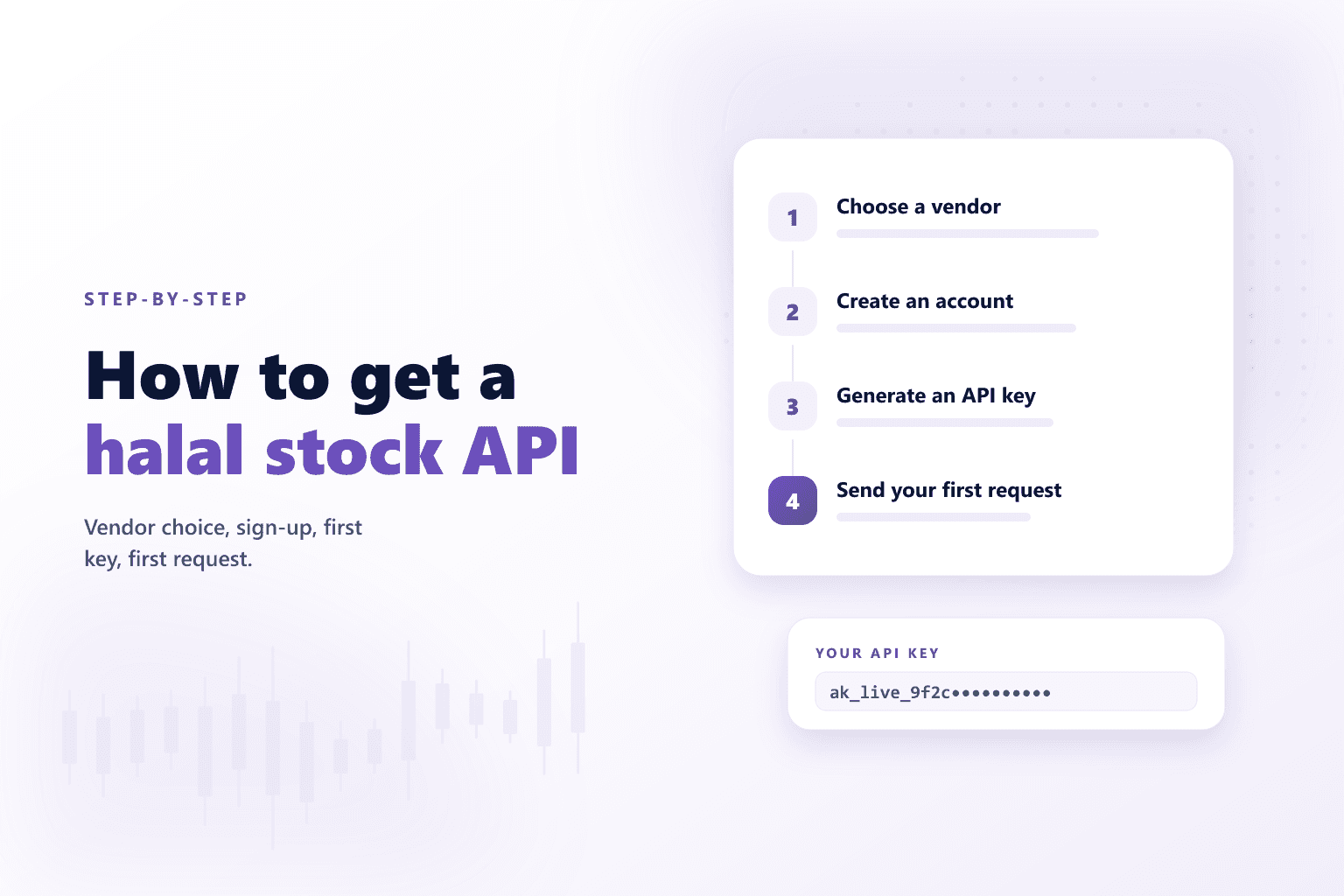
You're building something — a halal investing app, a Shariah-screened ETF dashboard, a Telegram bot that filters tickers, a back-office tool for a wealth firm — and you need a programmatic way to get halal verdicts on stocks. This guide walks the practical “how” for 2026.
1. Pick a vendor
See our halal stock screening API comparison for the four serious options in 2026. For self-serve developer integration with a free tier and transparent pricing, the path of least friction is Akinda — the rest of this guide assumes that. The high-level steps apply to any vendor that offers a REST API.
2. Sign up
Create an account at /signup. Email or Google works. No credit card required for the Basic tier.
3. Grab your API key
The dashboard auto-provisions a key on first login. Copy it from /api-keys. Keys are passed as the apikey query parameter or the X-API-Key header on every request.
4. Fire your first request
cURL
curl "https://b2b-api.akinda.io/api/v1/compliance/AAPL?apikey=YOUR_KEY"
5. Add context as you need it
/compliance is the one-line verdict. Upgrade to /basic-report when you want the two financial ratios (debt + liquidity) plus non-compliant revenue on the same payload, and /full-report when you want the full AAOIFI screening grid plus AI-extracted SEC dollar values and the source-revenue breakdown.
6. Scale up
When you outgrow the free tier's 10 calls a day, upgrade to Personal Standard or Business depending on your rate-limit needs. The pricing matrix is published in detail on the pricing page — no “contact sales” below Enterprise.
Useful next step
Verify it yourself via the Akinda API
Fire a live /full-report/<ticker> call from the playground using your own API key — see the compliance ratios, AAOIFI screen verdict, and source-breakdown fields the methodology produces.
Related reading
Keep reading
Which companies changed verdict, and whether it was the company that moved or the standard's own limit.
Findings measured across the funds and companies we screen, with the date each was taken.
Basket coverage decides what a fund verdict is worth, and it drifts without anyone trading.
The funds marketed as Shariah-compliant, each against all five rulebooks rather than ours alone.